
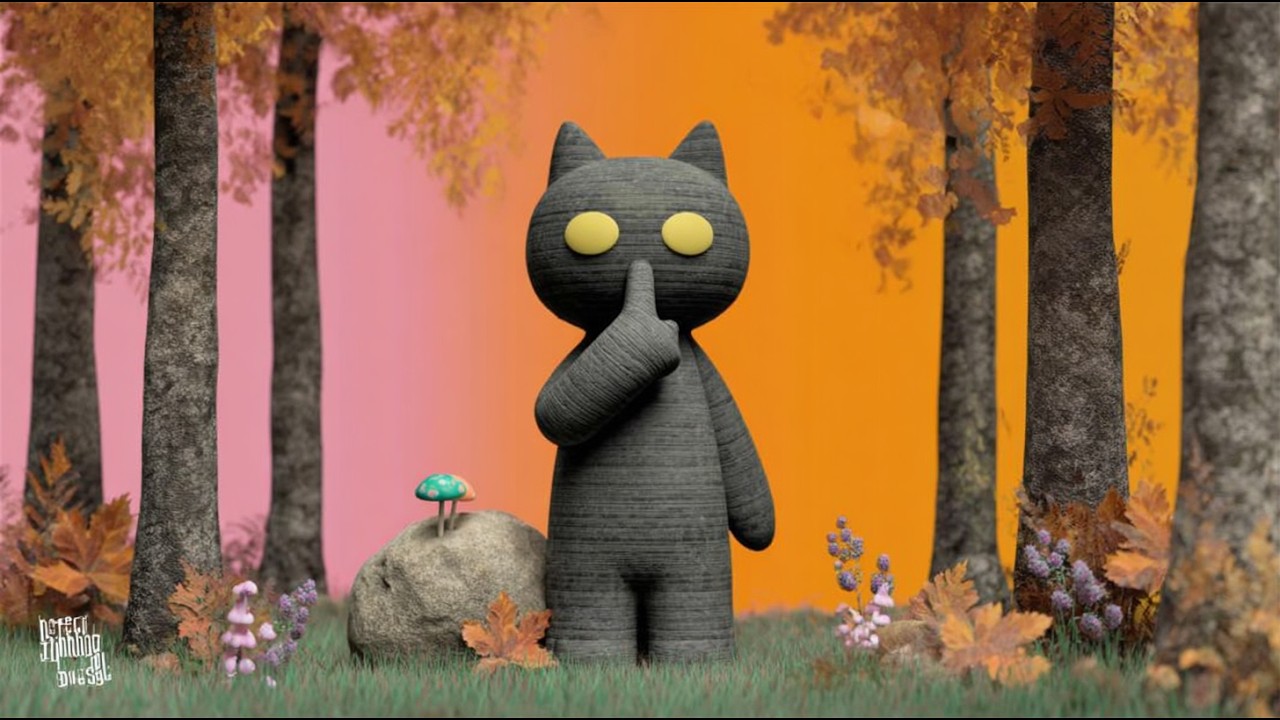
There’s a moment when non-dual pointing starts working—and then starts failing again.
Not because it’s wrong, but because it succeeds just enough to create a new expectation: a mental image of what you’re supposed to see. Flatness. Luminosity. Transparency. The “right” kind of experience.
And then the mind does what the mind does: it tries to find that image with thought. It narrates. It compares. It remembers. It tries to get back to the “good” experience.
The speaker calls this a trap. And he says the way through is surprisingly vulnerable: stop tainting experience with expectation and description. Be willing to live with a secret you can’t report.
That’s the secret—not a new concept, but a willingness to stop making one.
The Secret of Nonduality, and Why It’s Defined by What It Isn’t
There is a kind of secret to non-duality, and I’ll try my best to state it as literally as I can.
But first I want to say what it isn’t.
Part of the secret is defined by what it isn’t, because if you don’t see the traps, you’ll see what isn’t and think it is what is.
You might think you’re in on the secret, but part of you will know you’re not fully there. You’re not fully experiencing it.
Transmission: Words Used Beyond Their Intended Use
There is value to pointing. There is value to transmission.
Different types of pointing exist.
And the mere act of someone who has realized the non-dual truth as a lived experience—pointing out, transmitting—has power.
It usually comes in part through words, but it’s more than words. It’s what’s behind the words.
It’s using words to massage attention through thoughts, beyond thoughts, beyond mind, beyond concepts.
A little bit like poetry: poetry uses words as if they’re not intended to be used, so something beyond the words is illuminated.
Non-dual pointing is like that, but more penetrative, because it can lead to a profound transformation—maybe the most fundamental transformation possible.
Why “fundamental”? Because the most foundational thing is the sense of identity. And beyond that there are no more foundations. You’re beyond paradigms.
No Base Reality: Dropping the Background Assumption
Someone once asked me: “Do you think we’re in the base reality?”
And I said: at some point it becomes very clear there is no base reality.
When you penetrate the fundamental experience of identity, you see what “fundamental” really means.
You see how the sense of a background is created, and why it’s an illusion.
You see there is no substratum of experience. There is no source. There is no “way that things are.”
All paradigms are false. All maps are, at best, pointers. They’re never the territory.
And even that gets thrown away—not just the map, but the territory too—because there’s no territory.
[Possible clarification needed: this is pointing to the collapse of the “background/substratum” assumption and the failure of paradigms, not a claim of nihilism (“nothing exists”).]
The Pitfall: Expectation Created by Pointing
Here’s the pitfall.
Pointing that uses words can entice you to take the map as the territory.
It can entice you to take a sweet expectation and convince yourself it’s reality—“beyond foundation”—when it’s not.
So it’s important to see common examples of expectations that can be skillful pointers but become distractions when solidified.
Example Trap: “Everything Should Look Flat”
A common one is the claim: “When the subject-object construct drops away, everything looks two-dimensional. Everything looks flat.”
People then use that as a goal: “Everything’s not flat, so I don’t know if I’m experiencing non-dual.”
The problem is you’re looking for something made out of thought with thought.
Even if you find it, it won’t be it, because that isn’t what’s being pointed to.
If someone says “everything looked two-dimensional,” they’re not talking about your mental image of that. They’re pointing to something in their direct experience, and they don’t have a way of talking about it other than what it isn’t.
They’re saying “not three-dimensional,” so they say “two-dimensional.” Even that isn’t quite right.
But it’s closer than what it replaced.
If you take that and look for “flatness,” you can see how quickly it becomes a distraction.
You might get frustrated, or you might imagine it into existence.
Either way, you’re spinning in imagination.

Getting Honest: What Do You Actually See?
This is where the pointing becomes simple.
What do you really see right now?
You’ll say: “I see objects. I see this and that.”
Okay. Before you learned the names of those objects, what would you call this?
“Blue and green and dark and light.”
Okay. Before you learned those terms, what would you call this?
At some point you realize: the labels are not what you’re seeing.
You’re not seeing labels.
You’re not even seeing shapes in the way you think you are.
You’re not seeing arrangements and relationships of objects and colors and shades in the way thought narrates it.
That’s the pointing: what do you really see?
That’s the inquiry.
But if you’re looking for “flatness,” you miss the honesty of what’s actually seen.
Other Common Traps: Transparency, Luminosity, “Seeing Through”
There are many examples people get hung up on:
Seeing through objects.
Seeing luminosity.
The “seeing through” one is interesting because there’s something real about it, but it’s not what you imagine.
It’s not like you can hold up your hand and read a piece of paper through it.
Seeing through means everything is completely empty, including the seeing itself.
It’s empty seeing penetrating empty objects at no distance.
Even distance is empty.
There are no words for that.
There are no words for what it is, but it’s clear.
It’s the underlying structureless fabric of experience.
And it’s available.
But the moment you try to find “transparency” or “seeing through” as an image, you can imagine it.
So you’re better off being vulnerable to experience—so you’re not tainting it with expectation.
Not tainting it with an image in your mind.
Not tainting it with a memory of what someone said.
And here’s another curveball: not tainting it with your own memory.
You can have a profound non-dual experience—psychedelics, first awakening, a deconstructive honeymoon period—and later you try to “make it back,” to make the solid not solid again.
That doesn’t work because it becomes effort: pushing and pulling.
What revealed empty luminosity wasn’t effort. It was letting go of struggle and self-centered will.
So you can get trapped in your own memory too.
Another Pitfall: The Habit of Narrating Experience
Another thing—this one isn’t for everybody, but for many people—there’s a strong tendency to narrate your own experience.
An internal narrative: what’s happening, how you’d describe it.
People tell me: “I bounce out of my experience and think of how I would describe it to someone else.”
He gives an example of working with someone face-to-face. He was pointing, eye-to-eye, and every couple minutes she’d say: “Oh, you know what this is like?”
He kept pointing her back. Finally he said:
“I don’t really care what it’s like. I don’t care what your mental image of it is. I don’t need mental images anymore. This is clear now.”
He wasn’t trying to be a jerk. He was shocking the system a bit: that habit of describing is strong, and it isn’t dialing you in.
It’s like eating steak and someone keeps putting the menu in front of your face.
So notice that internal dialogue. Don’t fight it. Fighting tends to stir thoughts up more.
But do notice it, because if you don’t notice it at all, you may be identified with it.
If you drop into non-dual and it’s clear—formless, intimate—you won’t have an issue.
But if it feels unstable—bouncing into the head—notice: are you trying to describe it to yourself? Are you trying to explain it to yourself?
And are you comparing it to what you’ve heard it should be like?
Those are two common pitfalls.
Shadow Work Can Be the Missing Piece
He adds a key practical note.
If it’s really unstable, and you feel a lot of frustration and emotion around trying to do this, you may need more shadow work.
Unaddressed shadow makes it hard to stabilize non-dual, because stabilization is gentle.
It’s vulnerable.
You won’t be able to be vulnerable if you’re constantly reacting to unaddressed trauma.
So know that might be part of it.
But if it’s not that—if it’s subtler distraction—then he offers the secret.

The Secret: A Reality You Can’t Report
Here’s the secret, in the best way I can say it.
You have to be willing to live with a secret that you’ll never be able to tell.
This is his experience. He can’t know anyone else’s experience; he can only know what they tell him.
But he senses others with stable non-dual and no-self realization feel this way, and he’s talked with people who do.
What is revealed—the non-dual that’s revealed—any paradigm he has to talk about it, any words he can use, are a far cry from what it actually is.
They’re approximations.
The actuality is so beyond words—actually, not even “beyond words,” just not in the category of words.
It’s profoundly nuanced, paradoxical, intimate, alive, beautiful.
And he knows any of these words can become something to grab onto.
So he has to let go fully of any tendency to describe it at all, because it becomes distraction.
He has to be willing to live it knowing he may never be able to explain it to anybody, ever.
Even though he talks about it frequently, he’s still certain he can’t actually explain it.
He can illuminate things in you that you can look at that lead to this. He knows that works.
But describing it? Impossible.
So you can let go of any hope of knowing this through a description.
That doesn’t mean contemplations aren’t helpful. Inquiries help. Shadow work helps. It works.
But when it’s time to inhabit non-dual and no-self, it’s vulnerable because it’s a secret you can’t tell.
That’s the secret.
You have to be willing not even to try to tell it, because there’s no way.
There’s no point in talking about it. There’s not even an “it” to talk about. The moment you start talking, you’re making something up.
So it’s not just fruitless and impossible. It’s absurd to talk about it.
Coming from someone who talks about it—another paradox.
But you have to be willing to live it.
He calls it like living in a personal, impersonal, transpersonal wonderland—without loneliness.
It doesn’t exclude anyone else because there are no others to exclude.
What looks like bodies and people and others is also part of it.
Loneliness has more to do with trauma and the trauma of letting go of the self-structure.
Once that’s done, it’s settling in and relaxing into reality—letting reality be what it is—without fighting it, including fighting it by believing you’ll be able to explain it.
You won’t.
It’s never going to happen.
That’s the secret.
And he ends by admitting: hopefully this doesn’t confuse you more—because it’s impossible to talk about it.