
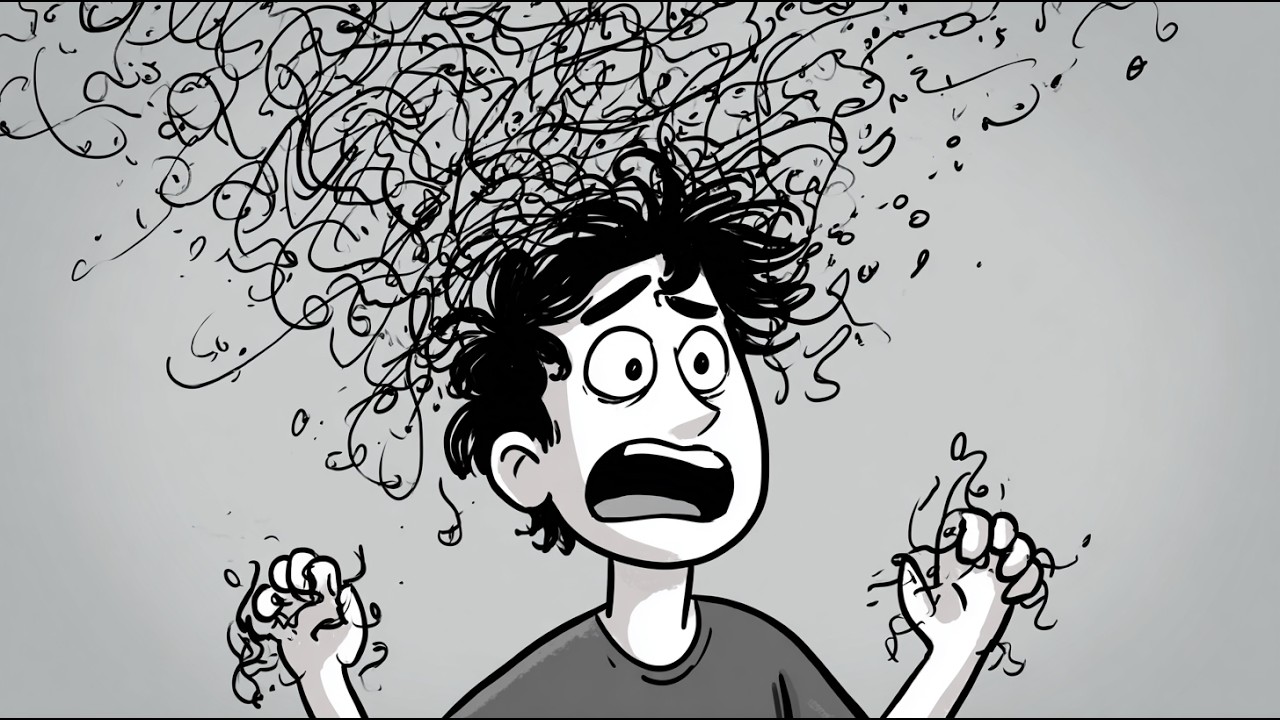
There’s a particular kind of frustration that shows up after years on the path. Not a passing doubt. Not a temporary plateau. More like: I’ve been at this for a decade… two decades… and nothing has happened.
You’ve heard the descriptions. You’ve heard the promise. You’ve watched other people talk about shifts. You want the relief, the truth of it, the freedom.
And then the mind turns that longing into a new kind of suffering: I can’t have what they have.
This talk doesn’t console that story. It challenges the mechanism underneath it—and it offers practical leverage for when your current approach is only stabilizing the same identity you’re trying to outgrow.
The Comment: “I’ve Been on This Path for Years and Nothing Happened”
I’ll periodically get a comment under one of my videos that says something like:
“I’ve been on this awakening path for years,” sometimes ten years, twenty years, “and I don’t feel like anything’s happened. Nothing’s moved. I haven’t had an awakening.”
There’s always frustration associated with that, of course.
So I want to address this as directly as I can and give direct, honest feedback—pointing and practical approaches—but also address what I think the fundamental issue often is.
This is for you if you’re that person.
First, I want to say I understand the frustration. I totally get it. You’ve heard all this about awakening. It sounds like what you want more than anything. It sounds amazing. It can sound like the best possible thing you could ever experience.
You want the relief, the release, the truth of it, the freedom—and it’s not happening. It’s not materializing for you.
I feel your frustration. I understand it.
Frustration Can Be an Entry Point
And it’s also frustrating when I say things like “it’s already here,” or when I say anyone can wake up, and yet to your experience that doesn’t seem true.
So I get all that.
And I want to point something out: frustration itself can be an entry point.
Not that frustration automatically wakes you up.
But if you can feel frustration in a visceral way—rather than feeling it and bouncing up into mind about the problem and solutions—then dropping deep into the feeling of it could be a path forward.
I’m going to talk about more than just that, though.

Why Nothing Moves: Stability as the Hidden Block
I’m going to be direct.
If you’re that frustrated and nothing has triggered awakening yet, what’s holding you up is often the stability.
You need to be destabilized.
I’m not saying that to be harsh. I’m saying that because if you really want to wake up and nothing has destabilized the identity structure, then that’s exactly what’s missing: destabilization.
What you actually need is destabilization.
In one sense, it’s the most fundamental destabilization because it’s an identity change—a shift in who you take yourself to be.
And there’s a reason he includes warnings everywhere—book, videos—because if you have major instability already, you may not be ready to wake up right now.
Psychosis, severe addictions, destabilizing mental illness—these can already be destabilizing. Awakening can destabilize further.
But for the vast majority of people who have some stability and no strong tendency toward psychosis, the destabilization is fine. People can handle it. And many unstable people wake up anyway.
Still: understand there is something fundamentally destabilizing about this.
The Core Pattern: A Competing Agenda
Here’s what he says he often senses in this situation: a significant competing agenda.
He’s not discounting that you want to wake up. He believes most people genuinely do.
But there’s something else going on that they’re not fully looking at, not fully willing to admit, not fully willing to feel.
A competing agenda means: you want to wake up, but you want to wake up in your own way.
He describes having face-to-face conversations at retreats where he pushed people until they destabilized, because he could sense it.
They want awakening, but they want it to be the way they think it has to be.
Even though they hear: it’s not what you think it is. You’re not going to get out of it what you think you’re going to get out of it. It’s not going to play out the way you want it to play out.
For some people, the “terms” are: no fear barrier. No certain emotion. No loss of a certain stability. No disruption of a certain identity.
But the thread is: you’re still trying to control the process.
The frustration is tied to insistence: “I want to go through this, but I want to keep my own stability. I want to be me as I do it. I want to stay the same me that’s seeking it.”
You can’t.
That’s the point.

What Are You Insisting On?
So how do you investigate this?
One inquiry question he’s used is: “What do I think awakening is going to give me?”
Then he offers another phrasing:
Is there stubbornness in me insisting, “Yes, I want to wake up, but I want it on my terms in a certain area”?
Where are you not negotiating?
Where are you insisting it has to go the way you want it to go?
Because awakening doesn’t work that way. It’s going to go the way it goes.
At some point, there has to be willingness to let go of all other agendas.
And right as awakening is starting to occur, you let go of all agendas—including the agenda for awakening itself—because the version you can imagine isn’t it.
There can also be noble-sounding competing agendas, like: “I want to wake up so I can help people.”
He calls that out bluntly. He says: sounds noble, but it’s not the core driver. The core driver is wanting relief from suffering.
His point isn’t to shame that. It’s to get you honest.
Awakening is for ending your suffering—deeply, fundamentally. It starts that process. It doesn’t end suffering immediately, but it gets under it.
And it’s a gift to you.
He uses an old saying: “If God wants to punish you, he answers your prayers.” The point is: getting what you think you want isn’t necessarily a gift. Awakening is different.
It asks you to enter the unknown—mystery, wonder—without promises.
The Right Kind of Rebellion
Frustration is often associated with rebellion.
The question is: where do you aim the rebellion?
If you aim rebellion at the universe—“No, it’s going to be the way I want it”—that’s the wrong kind of rebellion.
Mature rebellion is rebelling against the illusions you’re constructing in your own mind.
Be willing to rebel against that, seeing every thought, belief, perception, stance you formulate is based in delusion.
How do you know?
Because it hasn’t worked.
You’re suffering. You’ve been trying to wake up for twenty years.
So admit it doesn’t work.
Admit you can’t do this in the way you’ve been doing it.
That’s part of relinquishing control.
And control is what all of this is about.
Part of You Wants Awakening, and Part of You Doesn’t
Another way he frames it:
There’s a part of you that wants to wake up, and a part that doesn’t.
He doesn’t say that to blame the person. There’s no victim here. But he insists it’s true: when you’re really ready, you wake up.
So see the part that doesn’t want awakening.
If you hide it from yourself, you’ll spin your wheels.
Look at why you don’t want to wake up.
Maybe you don’t want to feel the fear. Maybe you don’t want to let go. Maybe you don’t want to let go of your idea of relationships that “must” go a certain way after awakening.
Maybe you don’t want to let go of the idea that awakening has to give you love and validation.
Whatever it is, ask: what am I not willing to let go of?
Be honest.
That shows you the part that doesn’t want to wake up.
And it’s okay that part doesn’t want to wake up. That’s honesty.
Practical Leverage: Change the Environment, Change the Input
Then he turns practical.
Often when someone is stuck for years, they haven’t done one or more of these:
Go on a retreat
Have you gone to an in-person retreat? A silent retreat with a realized teacher pointing every day—talks, guided meditations, Q&A—constantly challenging you?
The ego stabilizes easily in day-to-day life. It can stabilize even in suffering.
But in retreat, there’s silence. You can’t stabilize the ego through constant conversation. You have to face yourself.
Bodhidharma “facing the wall” means facing yourself.
You have nowhere to run. You’re not distracting yourself.
And the constant pointing undermines fixation. It pulls rugs. It destabilizes. That environment is powerful.
Work one-on-one with a realized non-dual facilitator
Whether on Zoom, in person, phone, or text—someone who can challenge you directly again and again.
Because the ego is the ultimate opportunist. It adapts to anything.
If you’re cycling the same thought loops for years, that’s the ego structure reifying itself.
You may need someone who has broken through that to help you break through it.
Sometimes it costs money. If you can’t afford it, look for someone who will do it for free.
A Zen center, monastery, Dzogchen teacher—find a teacher. People are out there.
Do shadow work and trauma work
Deep shadow work that challenges emotional fixations and trauma.
Deep shadow process, circling, inside circle—these are things he’s offering more and more and sometimes in retreats.
If you have trauma, do trauma work. Trauma therapist. Other trauma resources.
Consider an “awake therapist”
He notes there are some awake therapists out there, and this can be powerful if you’re in therapy already or need psychotherapy and awakening support.
Mix it up
Try something different.
If you’ve never meditated, meditate.
If you’ve never done inquiry, try inquiry.
Reset the algorithm. Shake up the Etch A Sketch.
If you’re working with a non-dual facilitator and nothing’s happening, try another one. Different approach. Different style. Even switching male/female facilitation can change what gets challenged.
He emphasizes: he sees these work consistently.
And he says plainly: if someone genuinely wants to wake up, they will. It’s not that we can’t figure out how to help someone wake up. It happens.
What usually happens when someone doesn’t wake up is they leave. It’s too triggering. They can’t handle the destabilizing elements.
They take off for a couple years and come back later when they’re tired of suffering.
So: get leverage on yourself. Think outside the box. Put yourself in situations you’re uncomfortable in. Do something different than you’ve done before.
That’s his advice.